2026-11-09 · Louis Delacroix
How to Handle Water Damage After Summer Storms in New Orleans
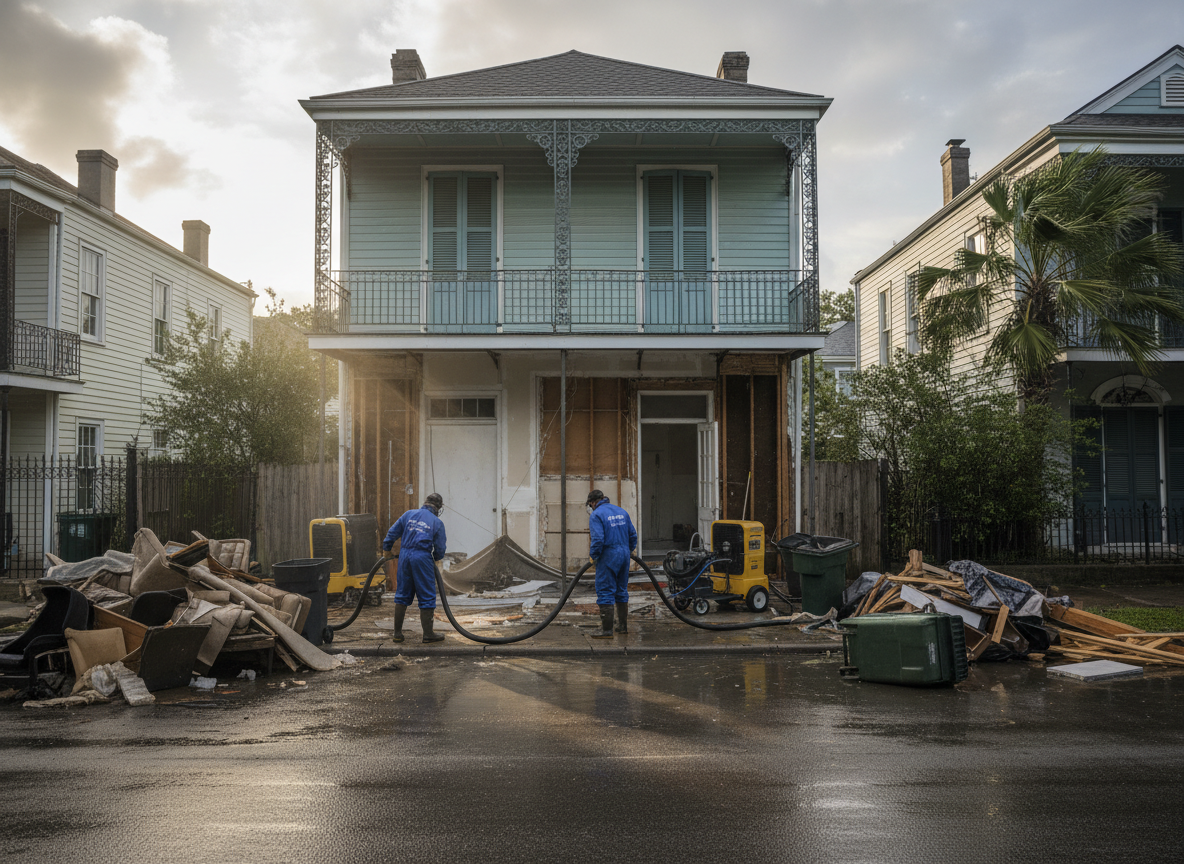
After summer storms in New Orleans, begin by shutting off power at the main panel if water reaches outlets or appliances, then document all affected zones with photos before any cleanup starts. This approach reduces electrical hazards and supports insurance claims for homes in Orleans Parish where flooding often enters through aging foundations in shotgun houses common to Uptown and Treme.
Assess Storm Impact in Local Housing Stock
New Orleans homes built before 1950 in neighborhoods such as the Marigny, Bywater, and Gentilly frequently feature raised foundations that still allow water to pool underneath during heavy rains. Walk through each room methodically, checking walls up to 18 inches above visible water lines because moisture wicks upward in the area's high-humidity environment. Note any soft spots in flooring or discoloration on plaster, especially in Lakeview properties near City Park where drainage canals can back up after a storm. Record water depth in inches and the time it stood to estimate drying needs, which often run 3–7 days longer here than in drier climates due to consistent 70–90% relative humidity levels.
Remove Water and Control Humidity
Extract standing water with a wet vac or submersible pump within the first 24 hours to prevent saturation of wooden subfloors typical in Garden District residences. Run commercial dehumidifiers set to 45–50% relative humidity alongside air movers aimed at baseboards, focusing on enclosed spaces like those found in Algiers Point homes. Open windows only when outdoor humidity drops below indoor levels, which rarely happens immediately after a storm in this subtropical region. Monitor moisture meters on drywall and insulation daily, removing saturated materials once readings exceed 15% to avoid hidden mold growth behind walls in Mid-City shotgun layouts.
Protect Belongings and Prevent Secondary Issues
Move furniture, rugs, and documents to dry areas such as upper floors in French Quarter buildings, elevating items at least 12 inches off wet surfaces. Discard porous materials like carpet padding or particleboard cabinets that absorb water quickly in the local climate. For items that can be saved, wipe surfaces with a 1:10 bleach solution on non-porous goods while wearing gloves and eye protection. In areas like the Bywater where storms coincide with high winds, check attics for roof leaks around chimneys and vents common to older construction.
Continue monitoring for musty odors or visible mold over the next 48–72 hours, particularly in crawl spaces under Treme homes. If moisture persists beyond initial extraction, water damage restoration becomes necessary to reach behind finished surfaces.
When Professional Intervention Is Required
Contact specialists if water has entered electrical systems, affected more than 10 square feet of drywall, or reached HVAC units in homes near Jackson Square or the Mercedes-Benz Superdome. Technicians familiar with Orleans Parish conditions use moisture mapping tools and HEPA filtration to handle the volume of water typical after summer events. Properties in nearby Metairie, Harvey, or Slidell often share similar challenges with poor drainage and clay soils that slow natural drying. For detailed guidance on long-term risks, review mold risks in humid New Orleans homes after flooding and what to expect when restoring shotgun homes after water intrusion.
Our team operates from 1215 Prytania St Ste 201, New Orleans, LA 70130 with hours Monday through Friday 8am–6pm and Saturday 9am–2pm to assist residents facing these exact conditions.