2026-11-09 · Louis Delacroix
What to Expect When Restoring Shotgun Homes After Water Intrusion
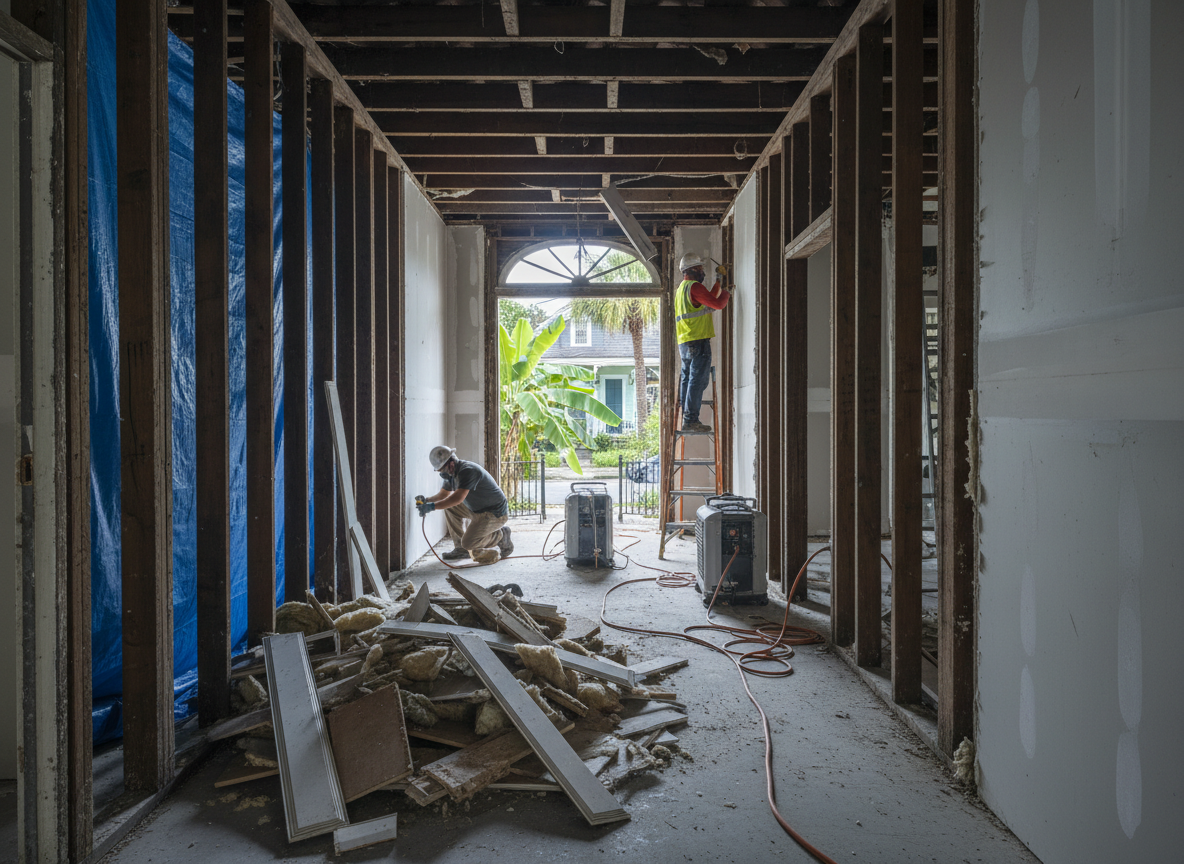
Restoring shotgun homes after water intrusion in New Orleans starts with thorough assessment of how moisture travels through the narrow, sequential rooms typical of these structures in areas such as the Garden District and Bywater. The single-file layout limits airflow, so water often pools in central sections near kitchens or bathrooms, requiring targeted extraction before any drying equipment can reach full effectiveness.
Shotgun Home Layout and Water Movement
Shotgun homes built decades ago in Uptown and Mid-City feature rooms aligned front to back without hallways, so water from roof leaks or rising ground moisture moves straight through shared walls and floors. In Orleans Parish, frequent heavy rains during hurricane season push moisture into pier-and-beam foundations common under these homes, where limited crawlspace access slows inspection. Plaster walls and heart-pine floors absorb and release water slowly compared with modern drywall, often leaving hidden saturation behind baseboards and in subfloors. Restoration crews must remove sections of flooring in sequence rather than working room by room, because each space depends on the next for ventilation paths. This layout also means electrical and plumbing runs are concentrated along one side, raising the chance that water reaches wiring during storms that hit nearby Metairie or Harvey.
Seasonal Climate Effects on Drying
New Orleans humid subtropical weather keeps relative humidity high for weeks after a storm, so even after initial water removal, moisture lingers in the dense wood framing of shotgun homes in Lakeview and Gentilly. Summer humidity combined with occasional tropical systems can extend the time needed to bring moisture readings below acceptable levels, especially when windows face prevailing winds that carry moisture from City Park or the lakefront. Crews place dehumidifiers in the front and rear rooms simultaneously and monitor readings at multiple points along the length of the house to avoid leaving damp pockets in the middle rooms. In winter, cooler temperatures slow evaporation rates, requiring longer equipment runtime in homes near the French Quarter where thick brick party walls retain cold. These patterns differ from drier inland regions, so local crews adjust equipment placement based on actual conditions rather than standard charts.
Material Challenges in Historic Construction
Many shotgun homes in Treme and Algiers retain original cypress siding and tongue-and-groove floors that swell and cup when saturated, demanding selective replacement instead of full demolition. Plaster on wood lath cracks and loses adhesion once wet, yet full removal can compromise the narrow interior walls that carry structural loads. Restoration focuses on drying in place where possible, then repairing only damaged sections to preserve the home's character while meeting current building codes in Orleans Parish. Salvaged heart pine can often be planed and reinstalled after proper drying, but any particleboard subfloor installed during later renovations must be cut out entirely because it disintegrates when wet. Crews working in the Marigny routinely test multiple layers of flooring because previous owners sometimes added new surfaces over older water-damaged ones.
Practical Timeline and Next Steps
After water intrusion, initial extraction and setup of drying equipment usually occurs within the first day, followed by daily moisture monitoring that continues until readings stabilize across all rooms. Once dry, repairs begin with targeted removal of affected plaster and flooring, then reconstruction that matches original trim profiles found in Garden District examples. Homeowners can review the full process in How to Handle Water Damage After Summer Storms in New Orleans for seasonal preparation tips. For properties showing secondary mold growth, Mold Risks in Humid New Orleans Homes After Flooding outlines inspection priorities. When professional drying or repair is needed, water damage restoration and water damage repair teams familiar with shotgun construction provide the most reliable results in these older neighborhoods.