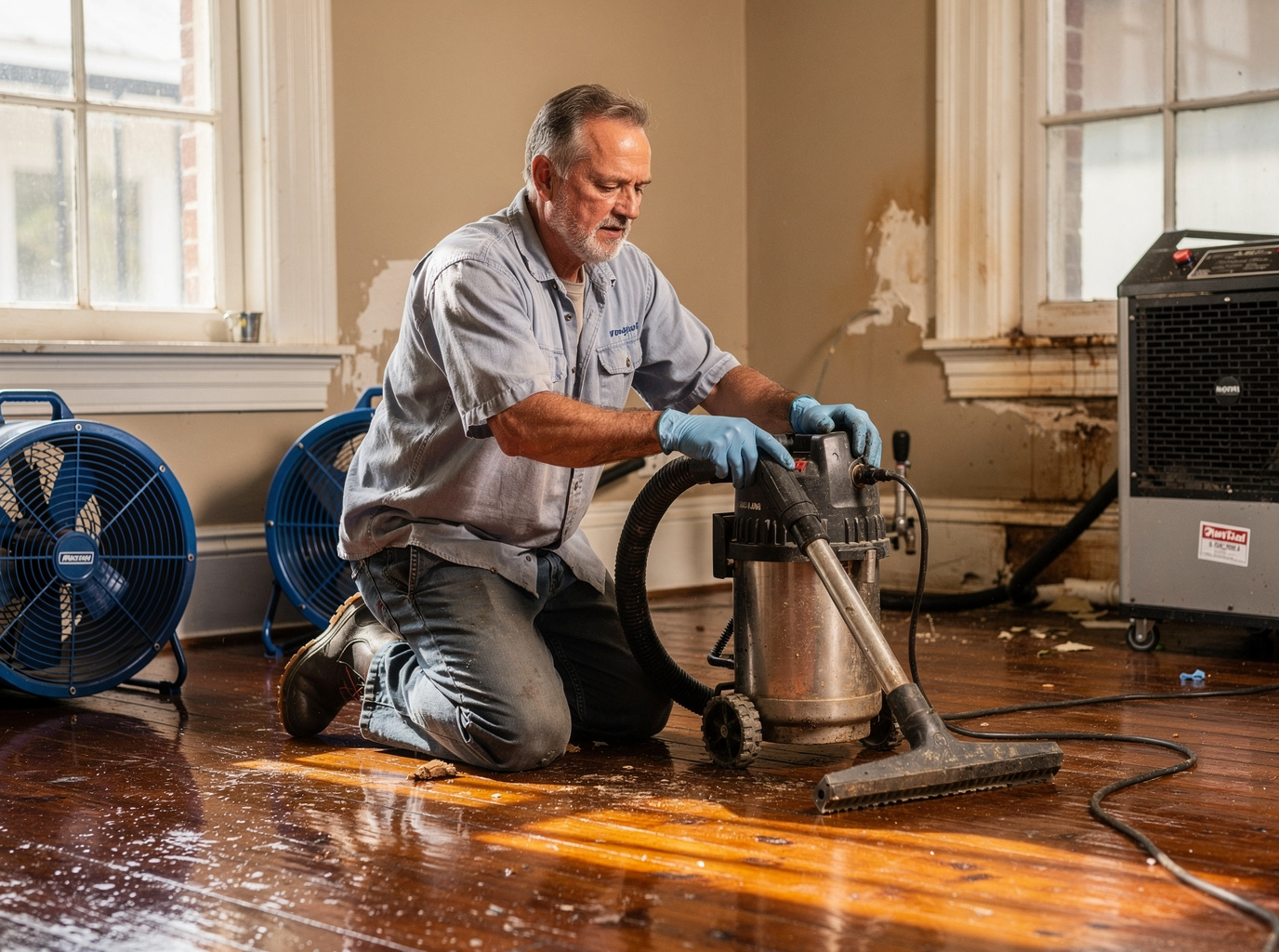
New Orleans homes in the French Quarter and Garden District often feature 19th-century brick and plaster construction that traps moisture behind walls after even brief flooding. The humid subtropical climate keeps relative humidity high year-round, so standing water in crawl spaces or under slab foundations in Lakeview and Gentilly can lead to hidden mold growth within 48 hours. Frequent hurricanes push water from Lake Pontchartrain or the Mississippi into low-lying blocks, requiring extraction equipment that can handle both fresh and contaminated water without spreading it to neighboring properties in dense blocks like the Marigny or Bywater.
Uptown and Mid-City raised shotgun houses sit on pier-and-beam foundations where water can wick into floor joists and insulation during heavy rains. Crews must remove baseboards and drill weep holes to promote airflow because closed-in cavities rarely dry on their own in this environment. Properties near City Park or Audubon Zoo often deal with poor drainage on flat lots, so restoration includes redirecting water away from foundations to prevent repeat saturation during the next tropical event.
Algiers and Treme homes built on older clay soils expand and contract with moisture changes, creating cracks that let water travel farther than visible damage suggests. Technicians use moisture meters on brick, lath, and plaster rather than assuming drywall methods will work. When water reaches electrical systems in these older structures, power must be isolated before drying begins to avoid hazards that do not exist in newer Metairie or Slidell builds.
Technician insight
In New Orleans the thing that catches most people out with water damage restoration is the high water table under Lakeview and Gentilly; even after surface water is gone, moisture keeps wicking back into pier-and-beam floors for weeks unless we keep equipment running longer than in drier soils.
Garden District shotgun after heavy rain
Water entered under the front door and traveled along the pier-and-beam foundation into two bedrooms. We found elevated moisture in the floor joists and insulation that standard fans would not reach. Extraction followed by targeted drying and selective board removal dried the structure before mold could form.
Water Damage Restoration Services We Offer
✓Emergency Water Extraction
Rapid removal of standing water from flooded homes in the French Quarter and Garden District using truck-mounted pumps suited to narrow streets and limited access.
✓Structural Drying After Storms
Industrial air movers and dehumidifiers placed in Lakeview and Gentilly crawl spaces and wall cavities to pull moisture from brick and plaster before mold sets in.
✓Mold Remediation After Flooding
Containment and removal of mold colonies that develop behind walls in Mid-City and Bywater homes following hurricane-driven water intrusion.
✓Sewage Cleanup in Older Homes
Safe extraction and disinfection of contaminated water that backs up into Treme and Uptown properties during heavy rains and overwhelmed drainage systems.
✓Moisture Mapping in Historic Districts
Thermal imaging and meter readings on plaster and timber in the French Quarter and Marigny to locate hidden saturation without unnecessary demolition.
Water Damage Restoration Cost in New Orleans, LA
| Service | Typical Range | What Affects It |
|---|---|---|
| Small-room water extraction and drying | $800–$1,800 | Varies with access in older French Quarter buildings |
| Whole-home drying after storm | $2,500–$5,500 | Higher in Lakeview and Gentilly due to foundation moisture |
| Sewage cleanup and disinfection | $1,200–$3,000 | Depends on volume and containment needs |
| Mold remediation after water event | $1,500–$4,000 | Affected by hidden growth behind plaster walls |
Ranges are typical for New Orleans, LA and confirmed with an exact written quote before any work starts.
How it works
- 1
On-Site Assessment
Technician inspects affected rooms in the specific neighborhood, checks moisture levels in walls and floors, and notes any sewage or structural concerns.
- 2
Water Removal
Pumps and vacuums extract standing water from the property while protecting adjacent areas in dense blocks.
- 3
Drying and Dehumidification
Air movers and dehumidifiers run continuously, with daily moisture checks until readings return to normal for New Orleans humidity levels.
- 4
Final Inspection and Clearance
Second moisture survey confirms all materials are dry before any reconstruction begins.
Pricing
Upfront quotes after inspection; final cost depends on water volume, affected square footage, and whether sewage or mold is present.