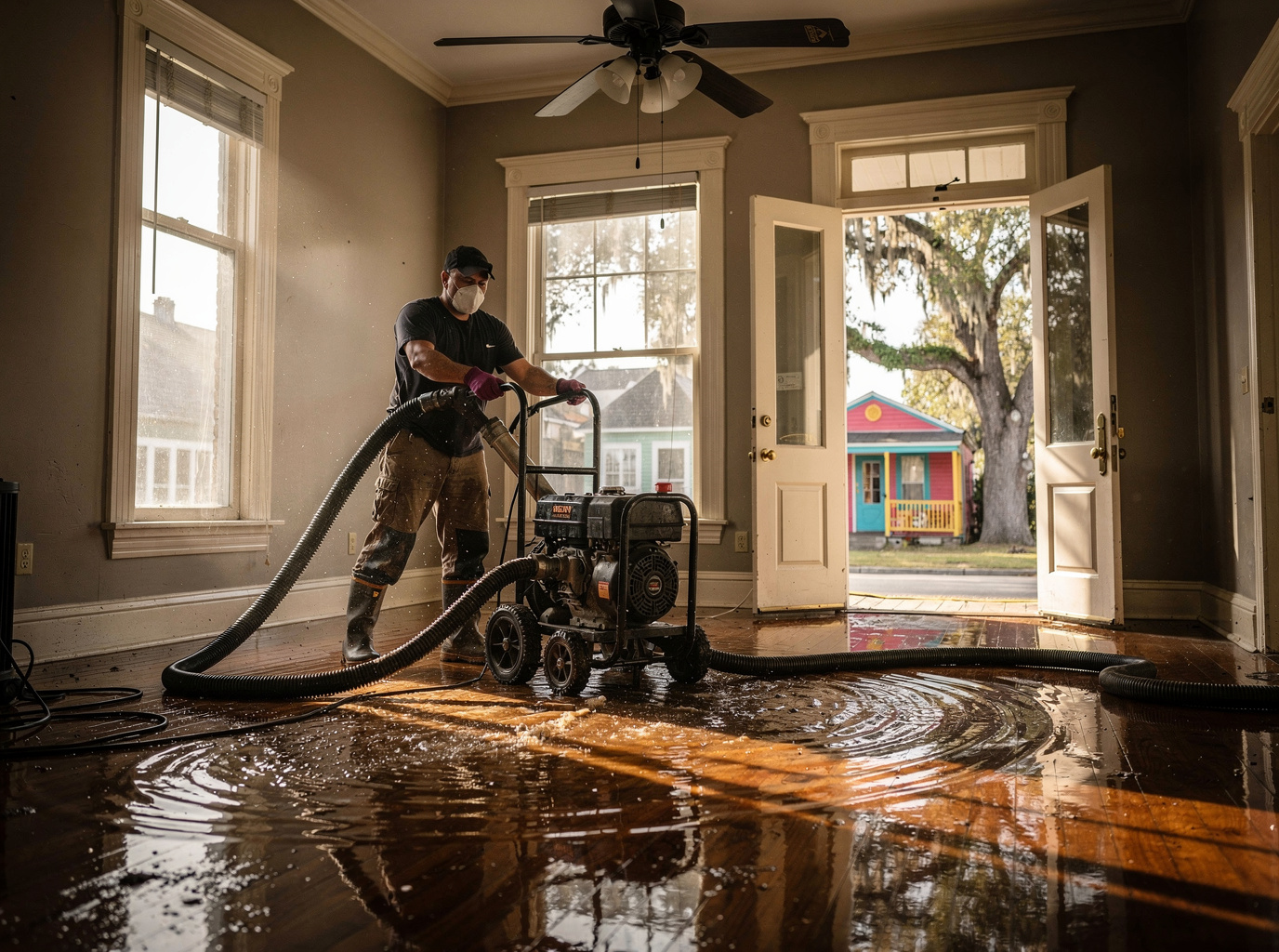
New Orleans homes in neighborhoods like the French Quarter and Treme often sit on older slab foundations or raised structures that trap water under floors after heavy rain. High humidity in Orleans Parish speeds up moisture migration into plaster walls and hardwood, so extraction must start within hours to limit hidden damage in tight crawl spaces common in Uptown and Mid-City properties.
Hurricane season brings surge and street flooding that reaches Algiers and Gentilly first, where drainage is slower. Technicians use truck-mounted pumps and moisture meters to pull water from saturated carpet pads and insulation before it reaches electrical systems in historic buildings near Jackson Square. Delaying removal lets water wick into neighboring units in dense blocks.
Lakeview and Bywater properties frequently see appliance or roof leaks during afternoon thunderstorms. Portable extractors and air movers are positioned to avoid disturbing original millwork while pulling standing water from subfloors. Crews check for hidden pockets behind brick in Garden District homes where water travels along mortar joints.
After initial removal, dehumidifiers run longer in the subtropical climate to reach safe moisture levels in oak floors and lath walls. Work in Metairie and Slidell follows the same sequence but accounts for slab-on-grade construction that holds water longer under tile.
Technician insight
In New Orleans the thing that catches most people out with Emergency Water Removal is how fast water travels through the lime plaster and brick in French Quarter and Garden District homes; once it hits the studs you lose days and the humidity here keeps everything wet longer than people expect.
Garden District Leak After Heavy Rain
Water from a roof leak reached the second floor in a raised home near Audubon Zoo. Extraction crews found moisture behind plaster on two walls and under oak flooring. Portable pumps and containment kept damage from spreading to the first floor. Equipment ran for four days until meters read dry.
Emergency Water Removal Services We Offer
✓Flooded Basement Extraction
Remove standing water from below-grade spaces common in older New Orleans homes using submersible pumps and containment barriers.
✓Storm Surge Cleanup
Clear water pushed into properties during hurricanes, focusing on French Quarter and Lakeview streets where drainage backs up quickly.
✓Appliance Leak Removal
Extract water from washing machine or water heater failures before it spreads into plaster walls in Garden District and Uptown residences.
✓Roof Leak Extraction
Pull water from ceilings and attics after heavy rain, protecting original woodwork in Marigny and Treme historic homes.
✓Crawl Space Water Removal
Dry enclosed spaces under raised homes in Mid-City and Bywater where moisture lingers and affects floor joists.
Emergency Water Removal Cost in New Orleans, LA
| Service | Typical Range | What Affects It |
|---|---|---|
| Initial extraction visit | $350–$850 | Varies with depth of water and access in older homes |
| Daily drying equipment | $150–$400 | Number of air movers and dehumidifiers needed |
| Crawl space or basement job | $600–$1,400 | Higher in raised homes with limited access |
| Post-storm multi-room removal | $900–$2,200 | Driven by square footage and sediment load |
Ranges are typical for New Orleans, LA and confirmed with an exact written quote before any work starts.
How it works
- 1
On-Site Assessment
Technicians arrive from the Prytania Street location and map water depth and affected materials in the specific neighborhood.
- 2
Water Extraction
Truck-mounted and portable pumps remove standing water from floors, walls and cavities without disturbing historic finishes.
- 3
Moisture Mapping
Infrared and pin meters locate hidden moisture in plaster and subfloors typical of Orleans Parish construction.
- 4
Drying and Monitoring
Air movers and dehumidifiers run until readings reach safe levels, with daily checks adjusted for local humidity.
Pricing
Pricing depends on water volume, affected square footage and how quickly crews reach the property after the event.