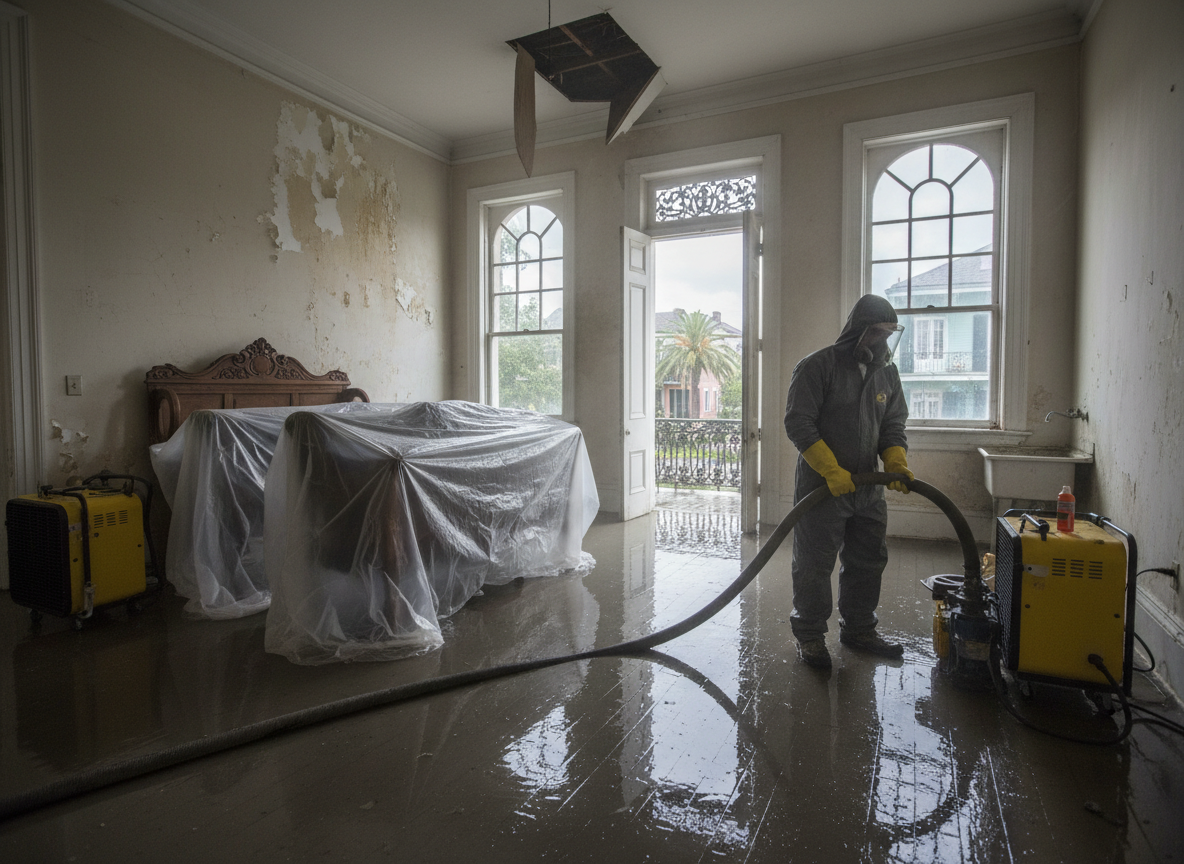
New Orleans homes built before 1950 in neighborhoods like the French Quarter and Treme often feature plaster walls over brick or lath that trap moisture after flooding. Once a hurricane pushes water into these structures, extraction must happen within hours or the high humidity accelerates mold behind baseboards and under raised floors common in Uptown and Mid-City shotgun houses. Technicians check for hidden saturation in crawl spaces where the water table sits close to the surface year-round.
Storm surge from the Mississippi or Lake Pontchartrain frequently reaches Algiers and Lakeview, saturating slab foundations and forcing crews to remove sections of flooring to prevent long-term structural rot. In the Marigny and Bywater, older cast-iron plumbing failures during heavy rains send water into shared walls between properties, requiring moisture meters to map the full extent before drying equipment is placed. Local codes in Orleans Parish require permits for any wall or floor removal that affects load-bearing elements.
After initial extraction, dehumidifiers must run longer here than in drier climates because relative humidity rarely drops below 60 percent even in winter. Crews monitor readings daily in areas like Gentilly and the Garden District where dense tree cover slows air movement and keeps affected rooms damp. Skipping this step leads to recurring musty odors and secondary damage that homeowners in Metairie and Slidell often discover months later.
Technician insight
In New Orleans the thing that catches most people out with Emergency Water Damage Restoration is how quickly mold grows behind plaster in pre-1920 homes once humidity stays above 65 percent for more than two days. Shotgun houses in Treme and the Marigny have tight wall cavities that standard fans never reach, so you end up tearing out more material later if you skip the first 48-hour moisture check.
Lakeview Flooding After Heavy Rains
Water entered a 1950s raised home through the crawl space during a summer storm. Crews found saturation under the living room floor and in two exterior walls. Extraction and targeted drying prevented mold growth; the owners returned to the space within five days.
Emergency Water Damage Restoration Services We Offer
✓Emergency Water Extraction
Rapid removal of standing water from flooded French Quarter and Garden District properties using truck-mounted pumps before mold sets in.
✓Structural Drying After Flooding
Targeted drying of walls, floors, and subfloors in historic Uptown and Mid-City homes using air movers and dehumidifiers calibrated for local humidity.
✓Storm Surge Cleanup
Cleanup and drying after hurricane-driven flooding in Lakeview, Gentilly, and Algiers where brackish water requires specialized equipment.
✓Moisture Mapping and Assessment
Detailed scanning of hidden moisture in Treme and Marigny brick and plaster walls to locate saturation that standard visual checks miss.
✓Sewage and Contaminated Water Removal
Safe extraction and disposal of floodwater containing sewage in Bywater and Lower Garden District properties after heavy rains.
Emergency Water Damage Restoration Cost in New Orleans, LA
| Service | Typical Range | What Affects It |
|---|---|---|
| Emergency extraction visit | $350–$750 | Varies by water depth and access in older homes |
| Full drying package | $1,200–$3,500 | Depends on square footage and humidity levels |
| Storm surge cleanup | $2,000–$5,000 | Higher when brackish water affects multiple rooms |
| Moisture mapping add-on | $200–$450 | Required for hidden damage in historic plaster |
Ranges are typical for New Orleans, LA and confirmed with an exact written quote before any work starts.
How it works
- 1
On-Site Assessment
Technician inspects the affected property in the reported neighborhood, measures moisture levels, and identifies hidden water in walls or under floors.
- 2
Water Extraction
Standing water is removed using pumps and vacuums suited to the volume and type of water present.
- 3
Drying And Dehumidification
Industrial equipment dries the structure while daily readings track progress in the humid New Orleans climate.
- 4
Restoration And Repairs
Damaged materials are replaced and the space is returned to pre-loss condition following Orleans Parish guidelines.
Pricing
Upfront quotes provided after inspection; final cost depends on water volume, affected square footage, and drying time required.