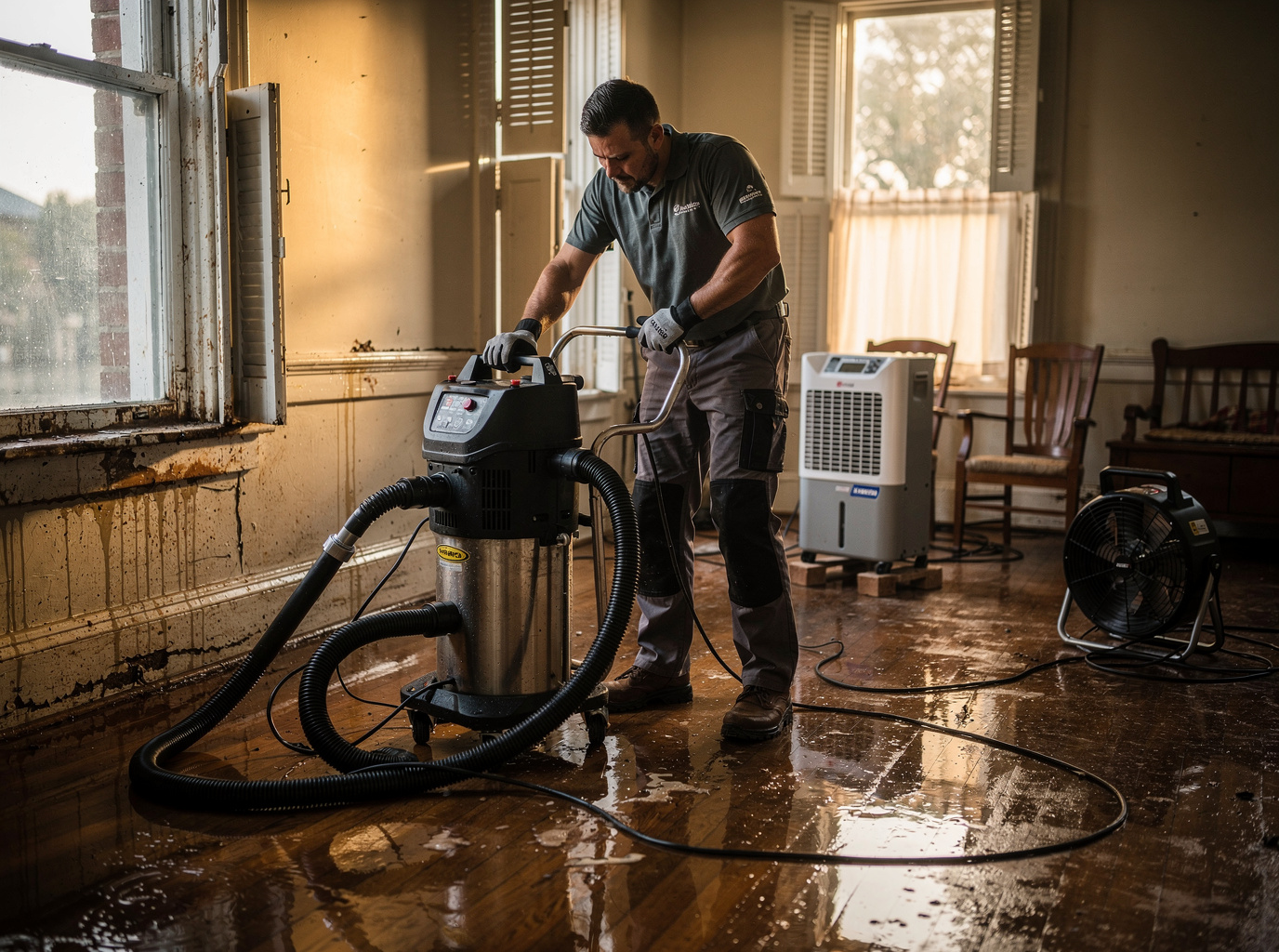
New Orleans homes in neighborhoods like the French Quarter and Garden District often feature 19th-century brick, plaster, and raised foundations that trap moisture after flooding from hurricanes or heavy rain. Water seeps into wall cavities and under floorboards, and the area's humid subtropical climate accelerates mold growth within 48 hours if drying is delayed. Technicians must account for Orleans Parish elevation differences and the proximity to the Mississippi River, which can prolong saturation in lower-lying blocks of Mid-City and Gentilly.
Post-storm jobs in Lakeview or Algiers frequently involve Category 3 water from street flooding that requires full containment and HEPA filtration to protect nearby properties. Older shotgun houses common in Treme and the Marigny have narrow layouts and limited access points, so crews use targeted air movers and moisture meters rather than whole-house drying to avoid unnecessary disruption. Nearby cities such as Metairie and Slidell share similar soil conditions that can wick water back into foundations days after the initial event.
Restoration plans must respect historic district guidelines when working on St. Louis Cathedral-adjacent properties or Uptown Victorians, meaning no removal of original millwork without documentation. Crews document hidden moisture behind cypress paneling and in attic spaces that standard fans miss, then monitor readings daily until levels match pre-loss conditions. This approach prevents callbacks that occur when humidity lingers in the region's frequent afternoon showers.
Technician insight
In New Orleans the thing that catches most people out with water damage restoration is how quickly humidity re-soaks plaster and cypress after the initial pump-out, especially in the raised-floor homes of Lakeview and the narrow shotgun layouts of the Marigny where air flow is restricted.
Garden District Flood Recovery
Heavy rain pushed water under a raised 1920s home in the Garden District. Inspection found saturation in the subfloor and insulation. Crews extracted water, placed drying equipment, and monitored readings daily until levels matched surrounding dry areas, preventing mold in the humid climate.
Water Damage Restoration Service Services We Offer
✓Emergency Water Extraction
Rapid removal of standing water from flooded homes in the French Quarter and Garden District using truck-mounted pumps suited for narrow streets and tight access.
✓Structural Drying and Dehumidification
Targeted drying of plaster walls and cypress floors in historic Marigny and Bywater properties with industrial dehumidifiers calibrated for high local humidity.
✓Mold Prevention After Flooding
Application of antimicrobial treatments and moisture barriers in Lakeview and Gentilly crawl spaces to stop mold growth common after hurricane-related water intrusion.
✓Historic Home Water Damage Repair
Careful restoration of original materials in Treme and Uptown residences while meeting Orleans Parish preservation requirements for visible damage.
✓Post-Hurricane Water Damage Restoration
Full cleanup and drying protocols for properties in Algiers and Mid-City following tropical storms, including removal of contaminated silt left by river overflow.
✓Crawl Space and Basement Drying
Specialized equipment for low-lying areas in Metairie and Slidell homes where groundwater seepage after heavy rain creates persistent damp conditions.
Water Damage Restoration Service Cost in New Orleans, LA
| Service | Typical Range | What Affects It |
|---|---|---|
| Initial Assessment | Free | Included when restoration work follows; covers French Quarter to Lakeview properties |
| Emergency Water Extraction | $900–$2,800 | Depends on volume and street access in older neighborhoods |
| Full Structural Drying | $1,200–$3,500 | Influenced by square footage and humidity levels after storms |
| Mold Prevention Treatment | $600–$1,800 | Varies with crawl space size common in Gentilly and Algiers |
| Historic Material Repair | $1,500–$4,000 | Higher in Garden District and Marigny due to preservation rules |
Ranges are typical for New Orleans, LA and confirmed with an exact written quote before any work starts.
How it works
- 1
On-Site Assessment
Technicians inspect affected areas in the specific neighborhood, document moisture levels in walls and floors, and identify water category before any work begins.
- 2
Water Removal
Extraction equipment removes standing water from interiors and crawl spaces while protecting adjacent rooms common in shotgun-style New Orleans homes.
- 3
Drying And Monitoring
Air movers and dehumidifiers run until readings stabilize, with daily checks to handle the region's persistent humidity and afternoon showers.
- 4
Restoration Work
Repairs to damaged materials and final cleaning return the property to pre-loss condition while respecting local historic guidelines where applicable.
Pricing
Upfront quotes after inspection; price varies by water volume, property age, and access in tight historic blocks.