2026-11-09 · Louis Delacroix
Mold Risks in Humid New Orleans Homes After Flooding
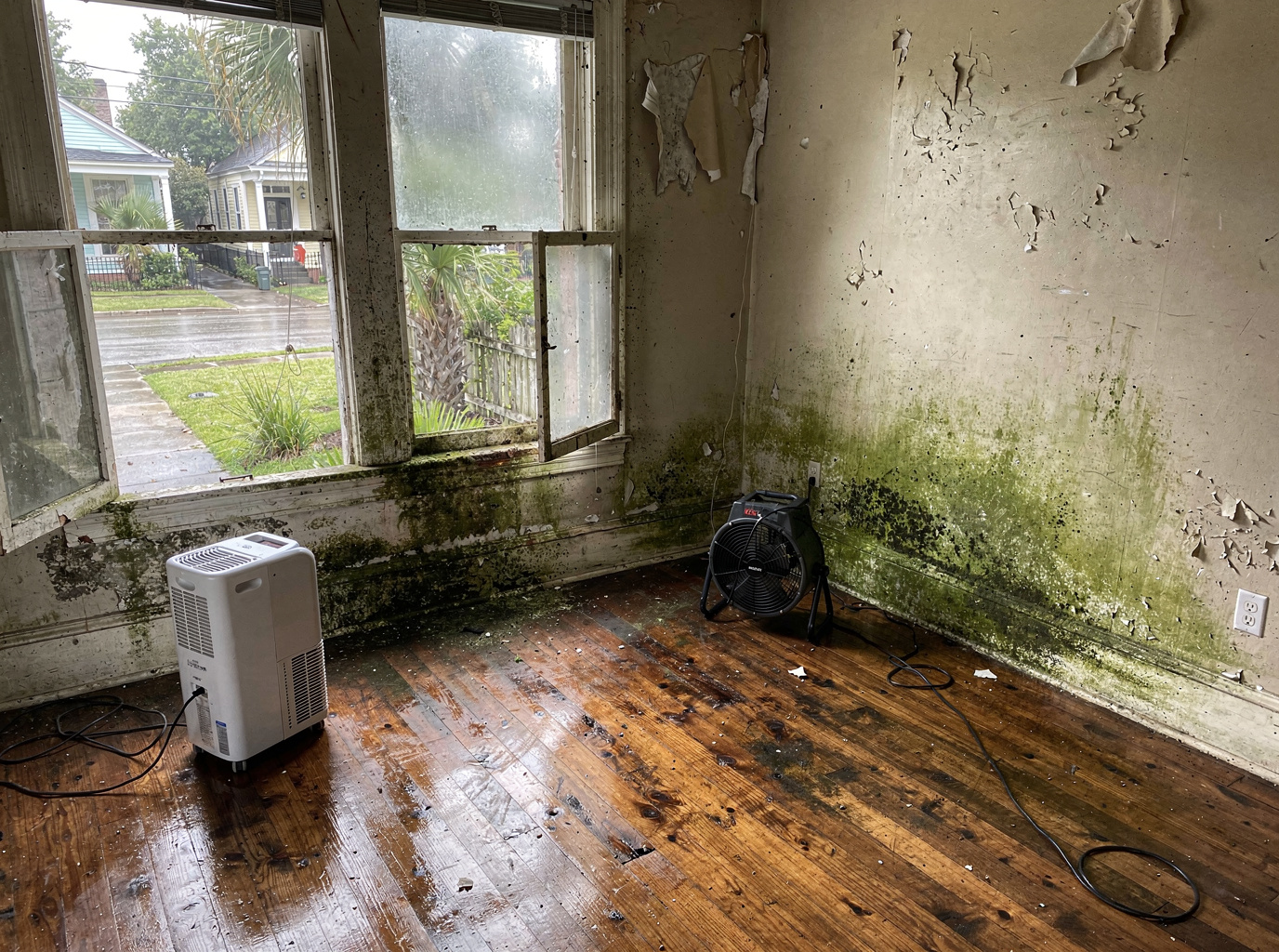
In humid New Orleans, mold can begin growing within 24 to 48 hours after flooding reaches homes in Orleans Parish. The combination of standing water, high moisture levels, and frequent hurricane activity creates ideal conditions for rapid spore development in older housing stock found throughout the French Quarter, Garden District, and Lakeview.
How New Orleans Humidity Speeds Mold After Floods
New Orleans sits in a humid subtropical zone where summer dew points often stay above 70 degrees, keeping indoor relative humidity elevated even after water recedes. Homes in low-lying areas such as Gentilly, Mid-City, and Algiers face repeated saturation from storm surge and heavy rain. Older plaster walls and raised wooden floors common in the Marigny and Bywater trap moisture longer than newer construction, allowing mold to colonize behind baseboards and under flooring within days. Residents in nearby Metairie and Harvey see similar patterns because the same weather systems affect the entire region. When floodwater sits for more than a day, the risk climbs sharply because evaporation slows in the dense urban layout.
Common Mold Hotspots in Local Housing Stock
Shotgun homes and double-gallery houses in Treme and Uptown often have narrow crawl spaces and limited airflow that trap humidity after a storm. Kitchens and bathrooms near Jackson Square or St. Louis Cathedral frequently develop hidden growth along pipe chases because original plumbing runs through uninsulated walls. In Lakeview and City Park neighborhoods, slab-on-grade homes built before modern vapor barriers allow water to wick upward into drywall. Garages and utility rooms in Algiers Point hold residual moisture from vehicle and appliance leaks that combine with outdoor humidity. These locations require targeted inspection rather than surface cleaning alone.
Timeline of Mold Development in Flooded Homes
Within the first 24 hours, visible mildew may appear on wet drywall in the French Quarter or Marigny. By day three, black mold colonies often form behind cabinets in homes near Audubon Zoo or the Mercedes-Benz Superdome if dehumidification is delayed. After one week, spores can spread through HVAC systems common in Mid-City and Gentilly, affecting multiple rooms. In areas like Slidell and Harvey that receive the same hurricane rainfall, the timeline shortens further when power outages prevent fans and dehumidifiers from running. Homeowners who wait beyond 48 hours without extraction see exponential growth that reaches structural lumber.
Practical Steps for New Orleans Homeowners
Remove standing water immediately using professional extraction equipment suited to the high water table in Orleans Parish. Run commercial dehumidifiers until indoor humidity drops below 50 percent, a level harder to maintain here than in drier climates. Cut away and discard saturated drywall at least 12 inches above the water line in shotgun homes to prevent hidden growth. Increase ventilation in enclosed spaces such as those found in the Bywater and Treme while monitoring for musty odors. For properties in Metairie or Harvey, schedule follow-up moisture readings because residual dampness in soil around foundations can reintroduce humidity for weeks.
Homeowners dealing with widespread intrusion often benefit from full Water Damage Restoration that includes drying and antimicrobial treatment tailored to local building types. Those facing repeated summer storms can review How to Handle Water Damage After Summer Storms in New Orleans for seasonal preparation. Properties with historic framing may also need guidance from What to Expect When Restoring Shotgun Homes After Water Intrusion before repairs begin.